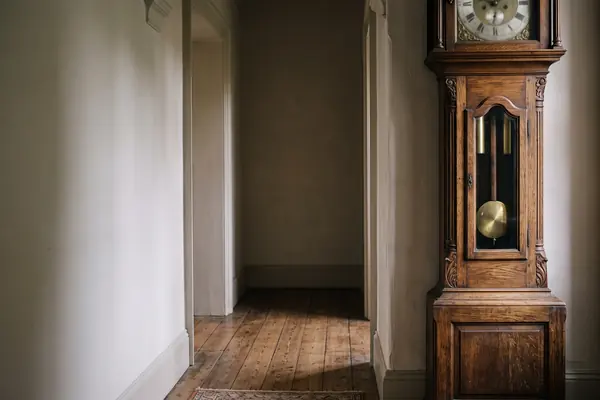
THE PENDULUM
A built-in beat
Unlike earlier controls, a freely swinging pendulum has a definite period of its own. Huygens made the first pendulum clock design at the end of 1656.
See the numbers
 theocl
AN INFORMATIONAL GUIDE: OLD CLOCK LORE
TICK once a second
A pendulum of just over 39 inches beats once a second.
Here OCL stands for old clock lore: this is an independent informational guide, not an organisation. The pendulum turned clocks from rough guides into instruments, and gave homes the tall longcase or grandfather clock.
Updated
Caring for a clockTHE SHORT ANSWER
The Metropolitan Museum of Art explains why
the pendulum changed European clocks.
THE PENDULUM
Unlike earlier controls, a freely swinging pendulum has a definite period of its own. Huygens made the first pendulum clock design at the end of 1656.
See the numbersTHE ESCAPEMENT
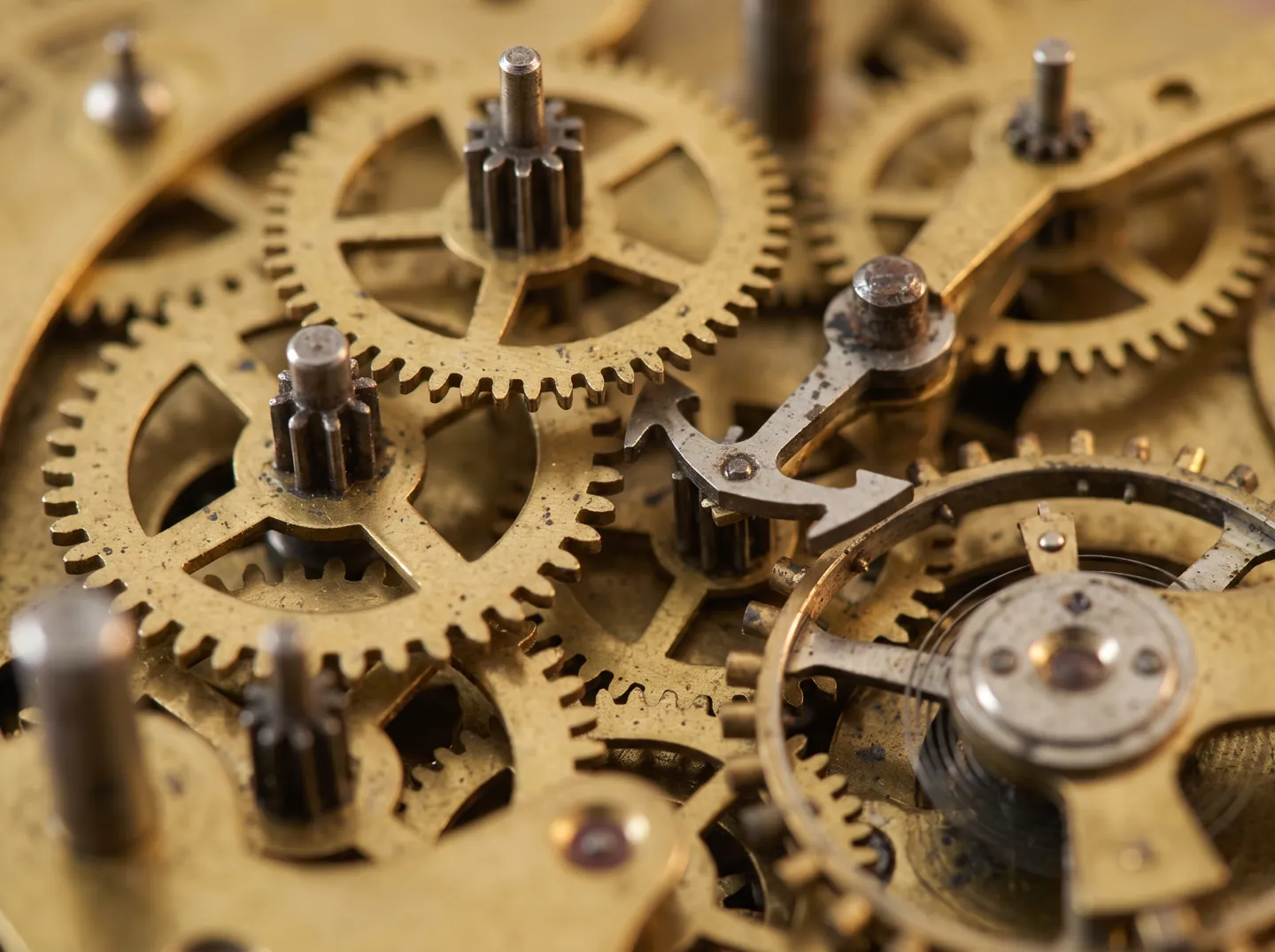
The anchor escapement allowed a long pendulum with a small swing, giving a one-second beat and a seconds hand without complicated gearing.
A short historyCARE
Conservators advise winding gently, steadily and fully, at the same time of day for 30-hour clocks or the same day each week for 8-day clocks.
Caring for a clockCARING FOR A CLOCK
Pick a task. The bar shows how strongly the Institute of Conservation's guide points to a professional horological conservator.
Based on Icon (the Institute of Conservation), Clocks: collections care guide. Every clock is different; ask a conservator if unsure.
TWO NUMBERS WORTH KNOWING
One figure from the Met's essay,
one from a Greenwich clock.
39 in +
Length of a seconds pendulum
A pendulum of slightly more than 39 inches beats once a second. The longcase grew up as the case to protect that pendulum and the weights.
PENDULUM · THE MET
13 ft
Pendulum of a 1676 Greenwich clock
Tompion's year-going clock for the Royal Observatory hung its pendulum behind the panelling. It helped Flamsteed show the Earth's rotation was constant.
OBSERVATORY · RMG
A Royal Society record of 1736 describes the same clock as going thirteen months without winding.
FOUR STEPS IN THE STORY
Drawn from the Metropolitan Museum of Art and Royal Museums Greenwich.
The Met credits Galileo with discovering the principle of the pendulum, and Huygens with turning it into a clock in 1656.
A London clockmaking family sent a son to learn in the Hague, and by November 1658 was advertising pendulum clocks in London.
The anchor escapement and a seconds pendulum needed a tall case to stand on the floor: the longcase, or grandfather clock.
By the end of the 1600s, clocks were accurate enough for astronomy, including Greenwich's year-going clocks of 1676.
KEEP IT HAPPY
Icon advises against placing a clock near any heat source, including strong sunlight or a mantel over a working fire, and suggests stopping a pendulum clock before going on holiday.
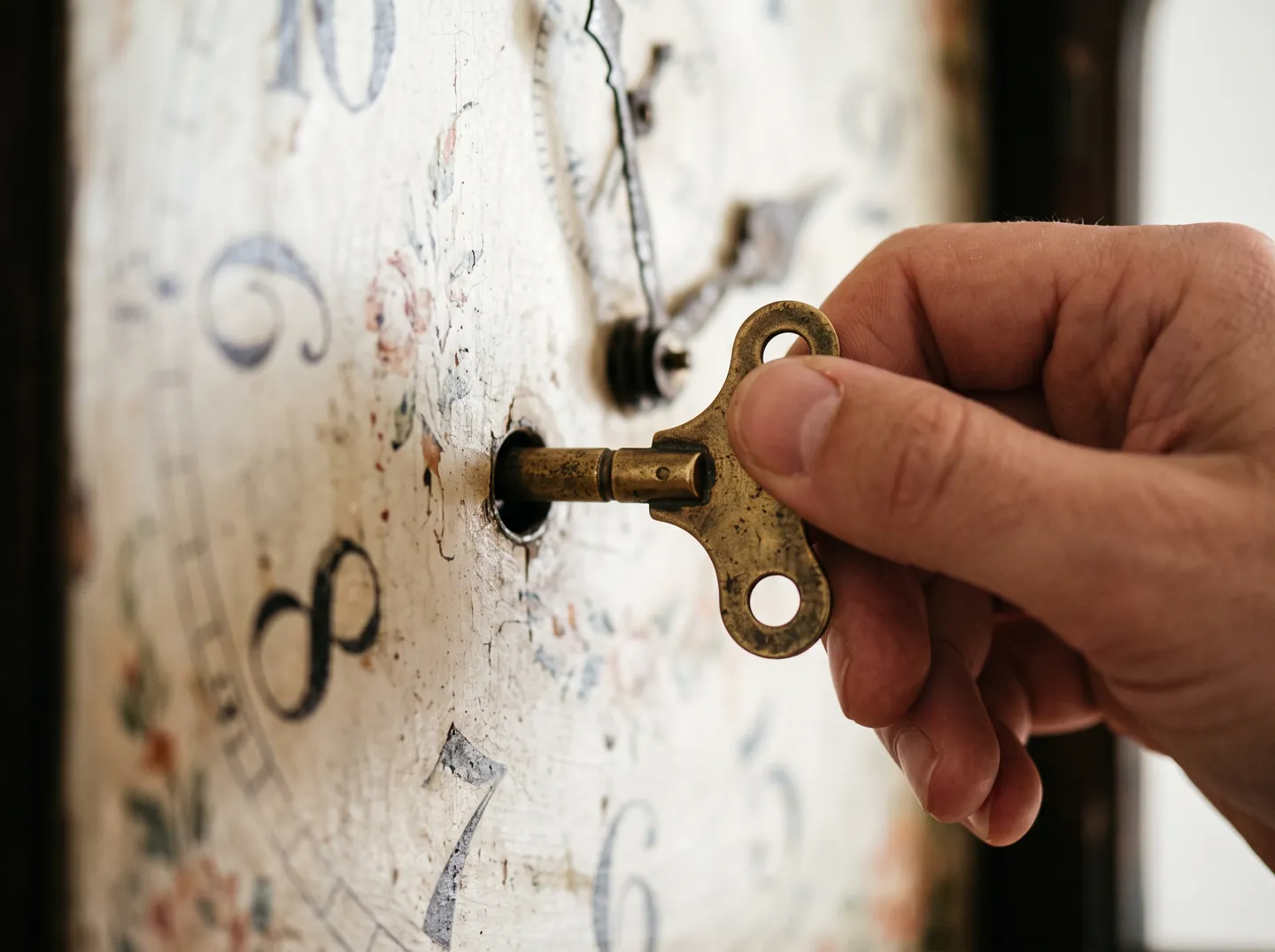
Pendulum clocks are not self-starting: move the pendulum about a centimetre to one side and let go. If it does not tick, try a little further, but not too far. Longcase and wall clocks should also be fixed securely to a wall, Icon says, both for safety and so that they run properly.
Questions
Old clock lore. This is an independent informational guide, not an organisation, shop or repairer.
A freely swinging pendulum has a definite period of its own, which the Met says made it far better than earlier controlling devices.
To house a seconds pendulum of slightly over 39 inches and the driving weights, according to the Met's account of the longcase.
Icon says there is really no such thing as over-winding, but winding roughly or suddenly can cause expensive damage. Count the turns as a guide.
Icon suggests re-lubrication every three years and a full professional clean after five years, and no longer than eight.
Sir Jonas Moore commissioned two clocks from Thomas Tompion after the observatory was founded in 1675, so that John Flamsteed, the first Astronomer Royal, could accurately record the motions of the planets and the Moon and help fix the positions of stars. Royal Museums Greenwich says the clock's accuracy let Flamsteed establish that the Earth rotates at a constant speed, which was fundamental to finding longitude at sea. Their escapement was the deadbeat, invented by Richard Towneley and made and modified by Tompion, the Royal Society notes.
Gently and slowly, using only the minute hand; Icon says never to move the hour or seconds hands. Let a striking clock finish striking before moving on, and avoid moving the hands more than an hour or so forward: for a bigger change, stop the clock and restart it when the time matches the dial. Try not to touch the dial, as moisture and grease from fingers can damage it.
Sources
ABOUT THIS NAME
theocl.net is part of the DoodleSale portfolio. It isn't in an auction right now, but you can ask about leasing it.